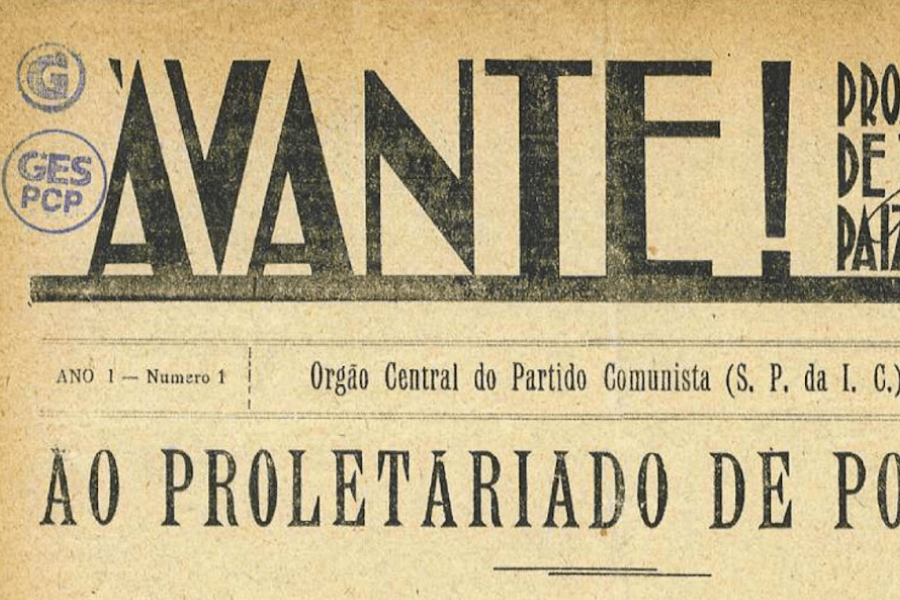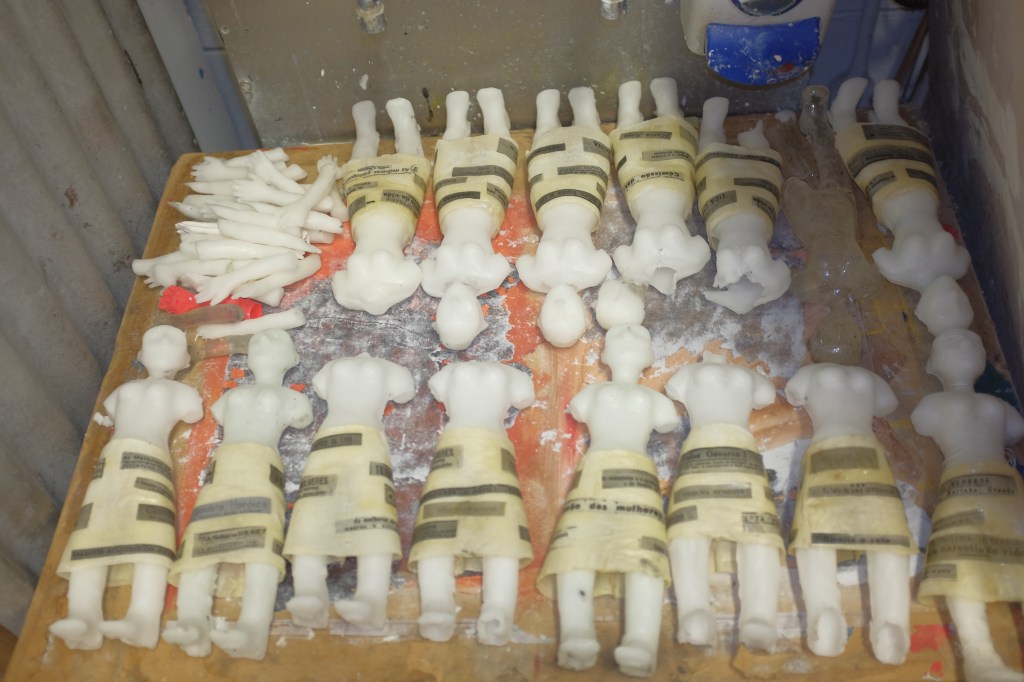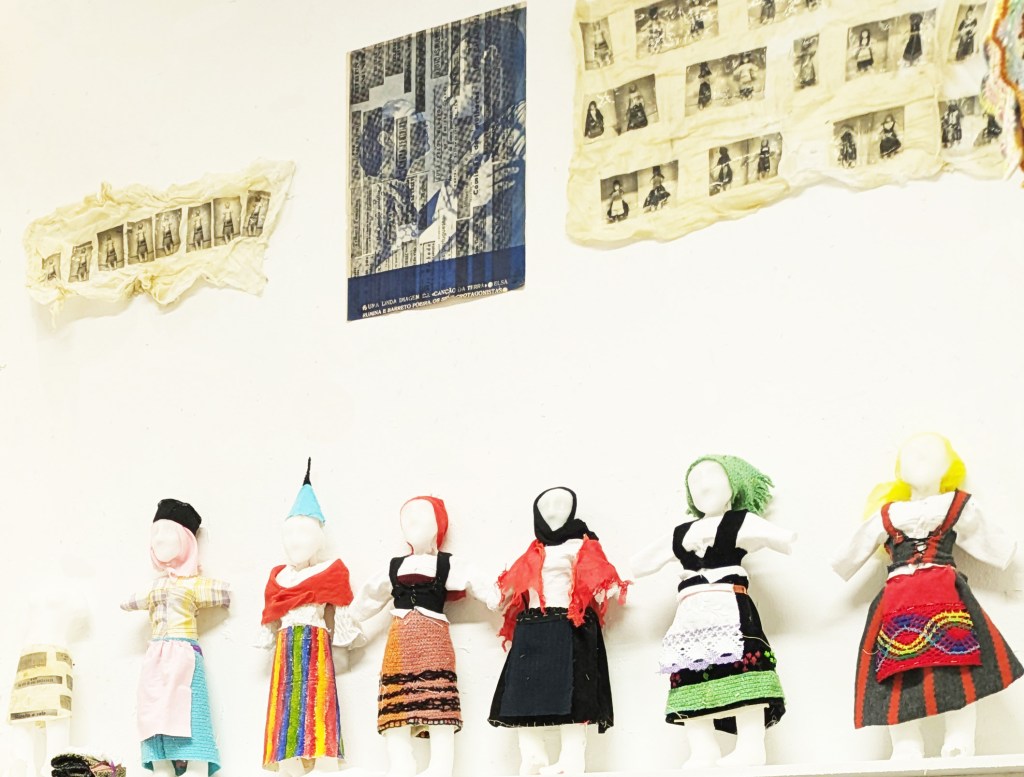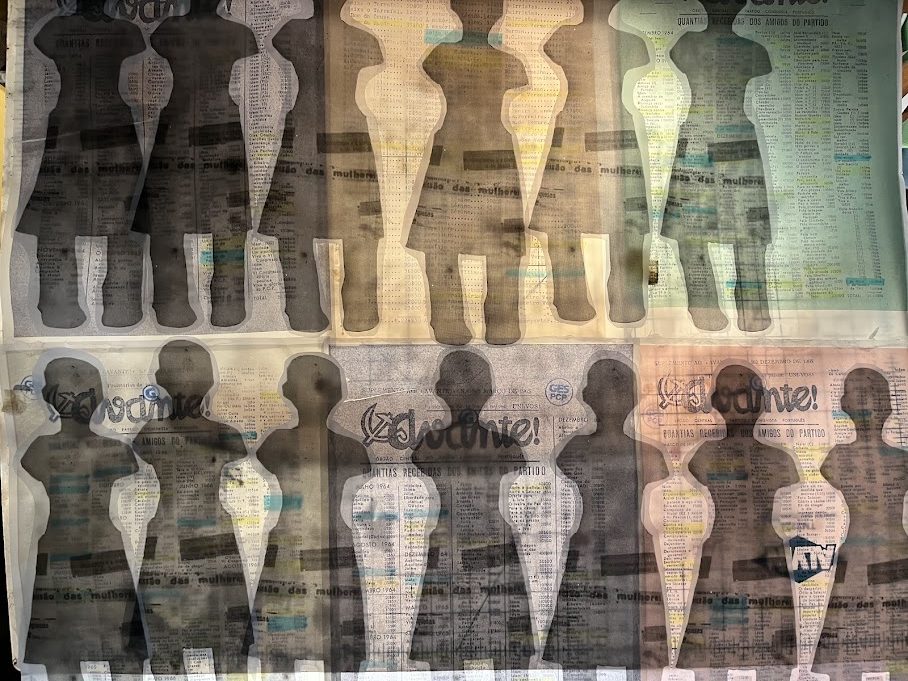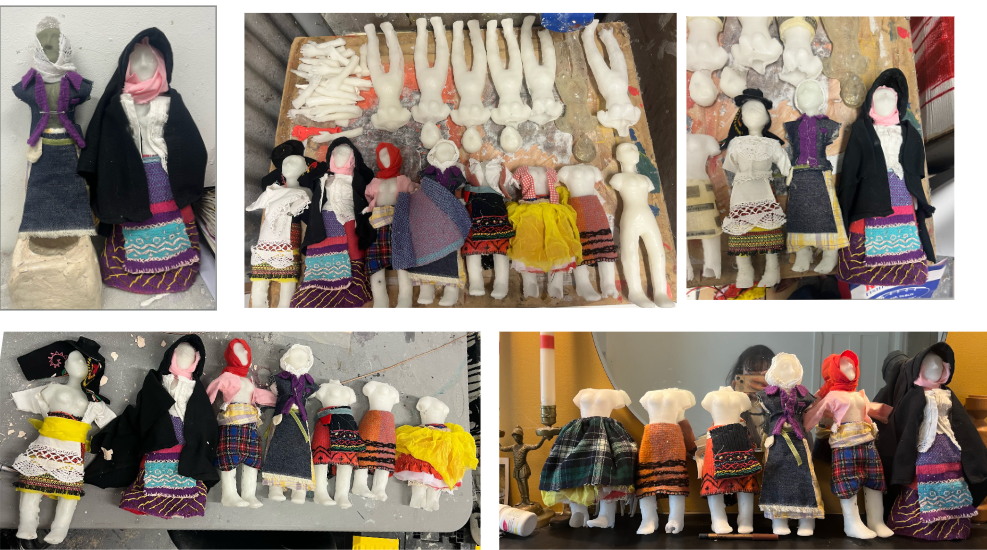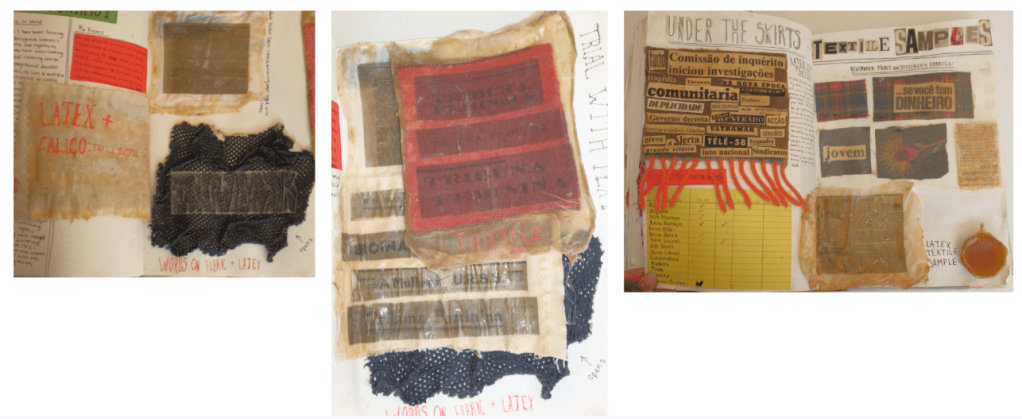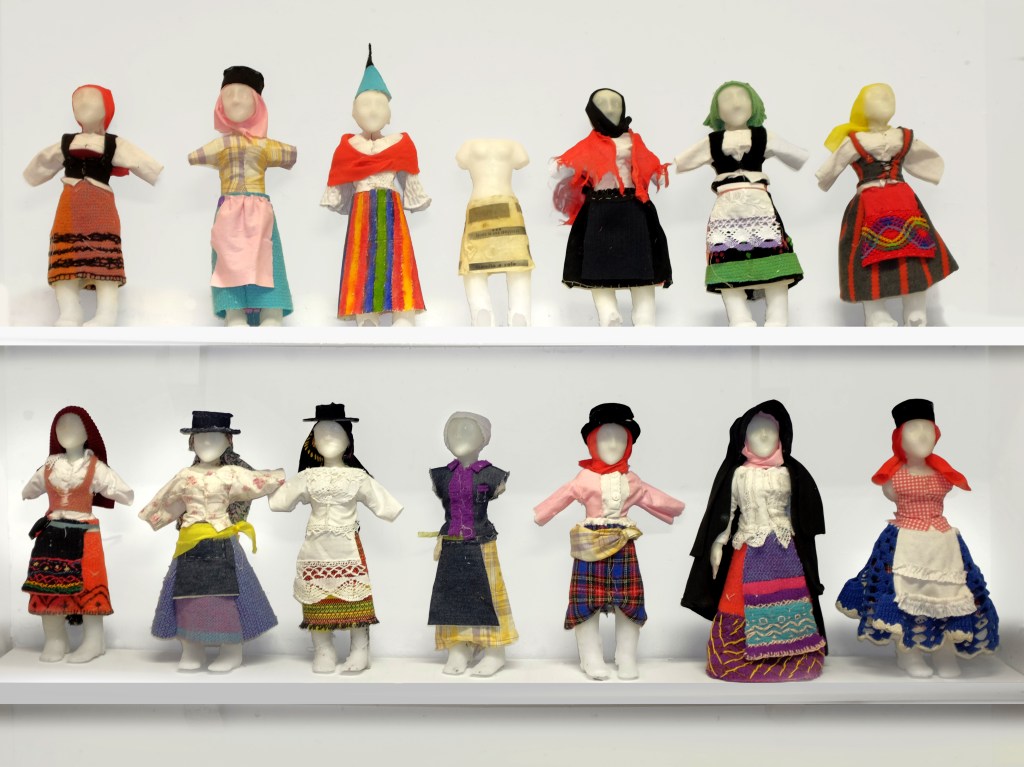
“Resisting Regional Costumes” is a set of fourteen wax dolls adorned in handmade regional costumes representing each old Portuguese district. This work discusses the intersection of women’s unseen role in Portugal’s 1974 revolution and devaluation of women’s craft and labour. This work draws from research on women’s involvement in workers’ unions and their place within the wider workforce, with a specific focus on women’s involvement within clandestine anti-dictatorial political operations during the Salazarian regime up until the Carnation Revolution on the 25th of April 1974. The dolls are representative of women’s labour, with elaborate costumes upholding an idealised tradition, which places little value on women’s work and skills. The hidden underside of the skirts are lined with lists of anonymous female donors and articles that discuss women’s direct role within revolutionary clandestine operations sourced from archived pre-revolution editions of the communist newspaper “Avante”.